The one-line difference: a pH number and a concentration number
The question comes down to two different measurements, not two versions of the same drink.
One is a measurement of acidity. The other is a measurement of how much of a specific gas made it into the glass. A bottle, tablet or machine can do either, both, or neither, and the label rarely says which test would even apply.
Full definitions, the pH and ppm figures, and the five sources (PMIDs)
Alkaline water changes the water's pH, the 0-to-14 acidity scale. Most tap and bottled waters sit at "typically pH 6.7 to 7.4", in the words of the 2012 pepsin study. Alkaline water is sold above that: the 2017 human reflux study defined its alkaline water as pH >8.0, and Essentia, a major bottled brand, labels its water "9.5pH or higher". The water gets there either from added alkaline minerals or from an electrolysis ionizer.
Hydrogen water leaves pH mostly where it started and instead dissolves molecular hydrogen gas, H2, into the water. That property is a concentration, printed as ppm or mg/L (the two are the same number for water), not an acidity. Trials use water from the 0.5 to 1.6+ mg/L the Molecular Hydrogen Institute reports for the general literature up to 15 ppm in the seven trials pooled by the 2023 lipid meta-analysis. The Institute puts most studies near 1.6 mg/L, which it calls the saturation concentration for pure hydrogen at one atmosphere of pressure. The 2024 systematic review notes that water can be hydrogenated "under elevated pressure, resulting in a supersaturated solution", which is how bottles arrive at claims of 4 to 8 ppm, and Piurify's own guidance says the gas "begins to dissipate almost immediately after being dissolved in water".
Plain-water pH ("typically pH 6.7 to 7.4") per Koufman & Johnston, Ann Otol Rhinol Laryngol 2012, PMID 22844861. "Alkaline water (pH >8.0)" per Zalvan et al., JAMA Otolaryngol Head Neck Surg 2017, PMID 28880991. "9.5pH or higher" per essentiawater.com, read Sep 7, 2026. Hydrogen saturation (1.6 mg/L, 1.6 ppm, at one atmosphere) and the 0.5 to 1.6+ mg/L general-literature range per the Molecular Hydrogen Institute, molecularhydrogeninstitute.org, read Sep 7, 2026; that figure describes the literature the Institute surveys, not the doses of the trials named on this page. "The H2 concentration in HRW in studies included here ranges from 4.76 ppm to 15 ppm" per Todorovic et al. 2023, PMID 37259294, discussion text, full text read Sep 7, 2026; that paper's own Table 1 lists one included trial below its stated floor, Song 2015 at about 0.6 ppm, which is the figure our hydrogen water benefits page prints for the same seven trials. "Elevated pressure, resulting in a supersaturated solution" per Dhillon et al. 2024, PMID 38256045, full text. Dissipation per Piurify, How Long Does Hydrogen Water Last, read Sep 7, 2026. Bottle claims of 4 to 8 ppm: see the hardware section below.
Side by side: what each one actually measures
Two different properties, two different units, two different tools to check them at home.
| Property | Unit & typical range | Home test tool | How long it lasts |
|---|---|---|---|
| Alkalinity (alkaline water) | pH above 8, up to 9.5, vs pH 6.7 to 7.4 for typical tap and bottled water | pH test strip or a digital pH meter | pH is not a gas; there is nothing to off-gas from an open glass |
| Dissolved hydrogen (hydrogen water) | 0.5 to 1.6+ mg/L in the general literature (MHI) and 4.76 to 15 ppm in the 2023 pooled lipid trials; 4 to 8 ppm claimed by bottles | H2 colorimetric reagent drops or a dedicated H2 meter | Volatile. Piurify's own table: open container, "a few minutes"; sealed plastic bottle, "1-2 hours"; sealed aluminium or Mylar pouch, "3-5 hours"; hydrogen bottle with storage capability, "up to 6+ hours" |
Hydrogen retention windows quoted verbatim from Piurify's storage table, How Long Does Hydrogen Water Last, read Sep 7, 2026; the same page adds that an opened sealed pouch is best drunk within 10 to 15 minutes. pH ranges per the sources in the section above.
What the evidence actually tested: a tube, a chart review, and swallowed hydrogen
The two categories have very different evidence, and the difference is in where the measurement was taken.
That is the whole contrast. Alkaline water's mechanism evidence never left the lab bench, and its human evidence never isolated the water. Hydrogen water's evidence is small, but it was randomized, blinded, and measured inside people who actually drank it.
The three studies one by one: pepsin in a tube, the 184-patient chart review, the 38-adult hydrogen RCT
"Unlike conventional drinking water, pH 8.8 alkaline water instantly denatures pepsin, rendering it permanently inactive. In addition, it has good acid-buffering capacity."
Koufman & Johnston, Ann Otol Rhinol Laryngol 2012, conclusions of an in vitro (test tube) study, not a human trialPepsin quote and "in vitro" per Koufman & Johnston 2012, PMID 22844861. Gastric pH ("a pH of 0.8 to 3.5") per StatPearls, Physiology, Stomach, NCBI Bookshelf NBK544242, read Sep 7, 2026. 2017 cohorts (85 PPI, 99 alkaline water plus diet) per Zalvan et al. 2017, PMID 28880991. 2020 trial design and findings per Sim et al., Sci Rep 2020, PMID 32699287.
The evidence scorecard: small hydrogen trials beat one alkaline test tube
Neither category has large-scale, definitive proof. But they are not tied. Here is what our source file actually contains for each.
The five sources scored one by one, and what the research does not say
pH 8.8 artesian water "irreversibly inactivated human pepsin (in vitro)" and had strong acid-buffering capacity. The most often cited mechanism evidence for alkaline water. Never tested on a person drinking it.
After 6 weeks, 62.6% of the alkaline-water-plus-diet group vs 54.1% of the PPI group reached a clinically meaningful reflux-score drop, a difference whose confidence interval crossed zero. Mean score drop, 39.8% vs 27.2%, did favor the diet arm. The water was never tested alone.
Randomized, double-blind, placebo-controlled: 1.5 L a day of hydrogen water (n = 20) or plain water (n = 18). Less apoptosis of peripheral blood mononuclear cells and down-regulated inflammatory-response and NF-κB networks in the hydrogen group; serum antioxidant and oxidative markers did not differ between groups overall.
Pooled across seven studies in clinical populations, hydrogen-rich water intake was linked to a significant drop in total cholesterol, LDL and triglycerides (p = 0.01), described by the authors as small to moderate effects.
Titled "Hydrogen Water: Extra Healthy or a Hoax?", 25 articles included. Conclusion: "preliminary results in clinical trials and studies are encouraging", but "larger sample sizes and rigorous methodologies" are needed.
Preliminary is not the same as proven, on either side
- None of the five sources above tested a finished product. They tested the mechanism, at a stated pH or dose, in a lab or a small trial.
- The 2017 alkaline study is the field's best human data point, and it measured a combined lifestyle intervention, not the water in isolation.
- The 2024 hydrogen review is the honest ceiling here: encouraging, not confirmed.
- A higher ppm or pH on a label is not shown by these sources to do more than a lower one. The 2024 review does cite one trial of water "containing over 7 ppm of dissolved hydrogen", but nothing here compares doses head to head.
Why the confusion exists: an alkaline ionizer is quietly a weak hydrogen generator too
Countertop and under-sink alkaline ionizers make their alkaline stream by electrolysis: an electric current splits incoming water into two channels, one acidic, one alkaline, across a membrane.
The reaction that produces the alkaline stream, at the cathode, is textbook chemistry, and it does not only raise pH. It also releases hydrogen gas at that same electrode.
Some of that hydrogen gas can dissolve into the alkaline water sent to your glass. So yes, in a strict chemical sense, an alkaline ionizer can also be making hydrogen water while it raises pH.
The cathode equation, and the ppm figures rival bottles print that AquaFusion does not
2 H2O(l) + 2 e- → H2(g) + 2 OH-(aq)
The cathode half-reaction in water electrolysis, standard electrochemistryWhat it is not doing is publishing that number. Ionizer makers spec their machines on pH and ORP (redox potential). That is the mirror image of what our own recon found on a hydrogen bottle: AquaFusion at $79.99 with no ppm printed anywhere, while rivals in the same category lead with a stated concentration (PUREPEBRIX H8000 at 8,000+ ppb (over 8 ppm) on its own certifications page and Echo Flask up to about 8 ppm, the Echo figure per the vendor materials and 2026 category guides in our recon read Aug 27, 2026; Piurify at "4000 PPB", i.e. 4 ppm, on piurify.com read Sep 7, 2026). The cathode's hydrogen is the same kind of unmeasured number, on the other side of the category.
Cathode reaction per standard water electrolysis chemistry; no study or figure is claimed for how much H2 an ionizer dissolves. AquaFusion "no ppm published" and the Echo Flask claim per our AquaFusion recon, read Aug 27, 2026; Piurify claim per piurify.com and PUREPEBRIX's "Test Results at a Glance | 8,000+ PPB | PUREPEBRIX H8000" per purepebrix.com/pages/certifications, both read Sep 7, 2026. Our AquaFusion review's rival column prints 8.1 ppm at a 20-minute cycle for PUREPEBRIX and about 4.1 ppm for Piurify; those came from 2026 category guides collected for the review, while the figures here come from each maker's own page read Sep 7, 2026. Our AquaFusion review still prices Piurify at about $144 to $190 from 2026 category guides; piurify.com's own page on Sep 7, 2026 showed $129.99 against a $199.00 list, so the cheapest bottle that publishes a ppm now sits below the review's $144 figure.
Cost and hardware: three ways to buy into either side
The price tag usually tells you which spec you are paying for, pH and ORP on one end, a printed ppm on the other.
Prices and ppm claims: ionizers, bottles from $79.99 to $299.99, magnesium tablets, with read dates
Countertop or under-sink ionizers
The priciest hardware in this comparison, and the least standardized on price: costs vary widely by brand. We have not verified a specific price breakdown by tier, so no dollar figures are printed for this category on this page.
Spec sheet: pH range and ORP. A ppm figure is essentially never printed.
Hydrogen water bottles, $79.99 to $299.99
Built to publish ppm. AquaFusion at $79.99 with no ppm (checkout read Aug 27, 2026, price grid re-rendered in our tier sweep of Aug 31, 2026). Piurify at $129.99 on sale against a $199.00 list, claiming 4,000 ppb, i.e. 4 ppm (piurify.com, read Sep 7, 2026). Our AquaFusion review still prices Piurify at about $144 to $190 from 2026 category guides; piurify.com's own page on Sep 7, 2026 showed $129.99 against a $199.00 list, so the cheapest bottle that publishes a ppm now sits below the review's $144 figure. PUREPEBRIX H8000 around $150 at 8,000+ ppb (over 8 ppm) on its own certifications page (purepebrix.com, read Sep 7, 2026; the $150 figure is the 2026 category guides in our recon, read Aug 27, 2026) and Echo Flask at $239.99 to $299.99 at up to about 8 ppm (vendor materials and 2026 category guides in our recon, read Aug 27, 2026).
The AquaFusion gap is the missing number this page is about.
Magnesium hydrogen tablets
Food-grade magnesium reacts with water to release H2. Retail tablets publish their own per-serving ppm claims and bottle counts, which vary by brand; we have not named a specific listing here, so no per-serving figure is printed for this category.
Often the cheapest way to try hydrogen, though only a home reagent test confirms what ended up in your glass.
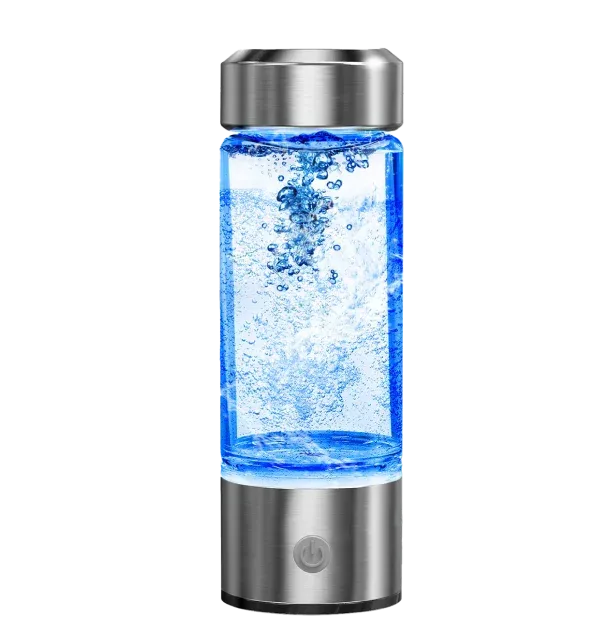
A hydrogen bottle in this price band buys a printed concentration claim and a cycle timer, minus, in AquaFusion's case, the concentration claim itself.
None of the three hardware types above were tested as finished products in the trials cited here. The trials tested the mechanism at a stated dose, not a specific gadget.
Where each price and ppm figure came from, and what was not verified
AquaFusion price per its US checkout, read Aug 27, 2026 and re-rendered in our tier sweep of Aug 31, 2026; our AquaFusion review re-rendered the same grid on Aug 30, 2026 and prints that date. Piurify price and ppb claim per piurify.com and PUREPEBRIX's 8,000+ ppb per purepebrix.com/pages/certifications, both read Sep 7, 2026; the PUREPEBRIX price and the Echo Flask figures per the guide-cited figures in our AquaFusion recon, read Aug 27, 2026. Our AquaFusion review's rival column prints 8.1 ppm at a 20-minute cycle for PUREPEBRIX and about 4.1 ppm for Piurify; those came from 2026 category guides collected for the review, while the figures here come from each maker's own page read Sep 7, 2026. We did not verify a specific ionizer price breakdown by tier or a specific magnesium tablet listing, so this page prints no per-tier or per-serving figures for either category.
Which to pick for which goal
The honest answer changes depending on what you are actually trying to get out of a hydrogen or alkaline water gadget.
Three goals, three picks: a hydration habit, a biomarker experiment, reflux
Neither is a treatment
- Neither alkaline water nor hydrogen water is a substitute for a prescribed medication, including for reflux, and both belong in the "structure and function" bucket, not the "cure" bucket.
- None of the studies cited here evaluated a specific finished product; they evaluated the ingredient, the gas or the pH, at a stated level.
- Anyone pregnant, nursing, on a sodium-restricted diet, or managing a kidney or digestive condition should ask a doctor before adding either as a daily habit.
Questions people also ask
Is alkaline water the same as hydrogen water?
No. Alkaline water raises the water's pH: typical tap and bottled water sits at pH 6.7 to 7.4, the 2017 human reflux study defined alkaline water as above pH 8, and a major bottled brand labels itself 9.5. Hydrogen water leaves pH mostly alone and instead dissolves molecular hydrogen (H2) gas into the water, measured as a concentration in mg/L or ppm: trial doses run from the 0.5 to 1.6+ mg/L the Molecular Hydrogen Institute reports for the general literature up to the 4.76 to 15 ppm the 2023 lipid meta-analysis reports for its own seven trials, and bottles claim 4 to about 8 ppm, inside that upper band rather than above it. They come from different mechanisms and are tested with different tools: a pH strip for one, an H2 reagent test or meter for the other.
Does an alkaline water ionizer make hydrogen water?
A small amount, as a byproduct nobody usually measures. Countertop ionizers split water by electrolysis; at the cathode, the reaction that produces the alkaline stream (2H2O + 2e- -> H2(g) + 2OH-) also releases hydrogen gas, and some of it can dissolve into the water the machine sends to your glass. But ionizers are marketed and specced on pH and ORP, not on a published ppm figure, so there is usually no way to know how much H2 you're actually getting, unlike dedicated hydrogen bottles that lead with a ppm claim.
Which has more evidence, alkaline water or hydrogen water?
Hydrogen water. A 2020 randomized, double-blind, placebo-controlled trial in Scientific Reports (38 healthy adults, 4 weeks) found less apoptosis of peripheral blood mononuclear cells and down-regulated inflammatory-response gene networks in the hydrogen group, a 2023 meta-analysis of seven studies in clinical populations found a significant drop in total cholesterol, LDL and triglycerides with small to moderate effects, and a 2024 systematic review of 25 articles calls the results preliminary but encouraging. Alkaline water's evidence is thinner: a 2012 study showing pH 8.8 water inactivates pepsin was done in a test tube, not in people, and a 2017 retrospective study often cited for reflux tested alkaline water combined with a Mediterranean-style diet and reflux precautions against a proton pump inhibitor, not alkaline water by itself.
Can water be both alkaline and hydrogen-rich?
Yes, in principle. The same electrolysis that raises pH at an ionizer's cathode also generates hydrogen gas there, so an alkaline stream can carry some dissolved H2. In practice, ionizer makers don't publish that number, so there's no way to compare an alkaline machine's hydrogen output to the concentrations used in hydrogen water trials or claimed by dedicated hydrogen bottles.
How we built this page
This is a literature-and-spec-sheet page, not a lab test. Every number on it traces to a passage we quoted verbatim in our source ledger, on a date we print.
Every source, PMID and read date behind this page, and what we did not test
- Alkaline water's mechanism evidence: Koufman & Johnston 2012, PMID 22844861, an in vitro study of pH 8.8 artesian water and human pepsin. It is also our source for the "typically pH 6.7 to 7.4" figure for tap and bottled water.
- Alkaline water's human citation: Zalvan et al. 2017, PMID 28880991, a retrospective chart review of 184 patients (99 on alkaline water above pH 8 plus a Mediterranean-style diet plus reflux precautions, 85 on a proton pump inhibitor plus precautions), outcome after 6 weeks.
- The 9.5 upper figure for alkaline marketing: Essentia's own label claim, "9.5pH or higher", essentiawater.com, read Sep 7, 2026. We could not load an ionizer maker's pH page, so no ionizer pH range is quoted.
- Hydrogen water's trials: Sim et al., Sci Rep 2020, PMID 32699287 (38 healthy adults, 1.5 L a day, 4 weeks); Todorovic et al. 2023, PMID 37259294 (seven studies, clinical populations, blood lipids); Dhillon et al. 2024, PMID 38256045 (25 articles, systematic review).
- Where this page says only hydrogen has a randomized trial, the statement is scoped to the studies listed above, the ones read for this page. We did not survey the alkaline-water literature beyond Koufman 2012 and Zalvan 2017, so it is not a claim that no randomized trial of alkaline water exists anywhere.
- Hydrogen concentration figures: saturation at 1.6 mg/L and the 0.5 to 1.6+ mg/L general-literature range per the Molecular Hydrogen Institute; the 4.76 to 15 ppm figure for the seven pooled lipid trials per the discussion text of Todorovic et al. 2023 (PMID 37259294), whose own Table 1 lists Song 2015 at about 0.6 ppm below that stated floor; the supersaturation sentence per the 2024 review's full text; retention windows per Piurify's storage table; all read Sep 7, 2026.
- Gastric pH (0.8 to 3.5): StatPearls, Physiology, Stomach, NCBI Bookshelf, read Sep 7, 2026.
- Vendor prices and ppm claims: AquaFusion, the PUREPEBRIX price and Echo Flask per our AquaFusion recon (vendor checkout read Aug 27, 2026 with the price grid re-rendered in our tier sweep of Aug 31, 2026; vendor materials and 2026 category guides read Aug 27, 2026); Piurify's price and ppb claim per piurify.com and PUREPEBRIX's 8,000+ ppb per its certifications page, both read Sep 7, 2026. Our AquaFusion review's rival column prints 8.1 ppm at a 20-minute cycle for PUREPEBRIX and about 4.1 ppm for Piurify; those came from 2026 category guides collected for the review, while the figures here come from each maker's own page read Sep 7, 2026. Our AquaFusion review still prices Piurify at about $144 to $190 from 2026 category guides; piurify.com's own page on Sep 7, 2026 showed $129.99 against a $199.00 list, so the cheapest bottle that publishes a ppm now sits below the review's $144 figure. We did not verify an ionizer price breakdown by tier or a specific magnesium tablet listing.
- We did not test any product, device or tablet ourselves, and did not estimate a ppm or pH figure for anything that does not publish one. We make no claim about how the body absorbs or clears either kind of water; none of our sources measured that.
- Nothing here is medical advice. A new water habit while pregnant, nursing, or managing a kidney, digestive or reflux condition is a conversation with your doctor first.
If hydrogen won the comparison for you
If hydrogen won the comparison for you and you want the lowest-cost entry, our AquaFusion review (/aquafusion-review/) prices the $79.99 glass bottle against Piurify, PUREPEBRIX and Echo Flask on the one spec that matters, published ppm.
Two tips before buying any hydrogen bottle: find the ppm, drink it fresh
The gap this page keeps circling back to, a device that does not publish its ppm, is not hypothetical. We found it on a real checkout, on a real bottle, at a real price.
Before you buy any hydrogen bottle, search its own product page for the letters "ppm" or "ppb." If the number is not there, it is not on the box either, and you have no way to compare it to either the 0.5 to 1.6+ mg/L general range or the 4.76 to 15 ppm the seven pooled lipid trials used.
Drink hydrogen water soon after the cycle finishes, not hours later. Piurify's own storage table gives an open container "a few minutes" and a sealed plastic bottle "1-2 hours"; an opened pouch is best drunk within 10 to 15 minutes.
The $79.99 bottle, priced against three rivals that do publish their ppm, with the checkout numbers dated.