Curex reviews, added up: $39 to $149 the range Curex publishes for the same monthly subscription, curex's Terms of Use: "all fees are non-refundable", sign-up fees included, plus "a non-refundable service fee of up to $100" once a consultation is completed.
The six monthly prices, each under the Curex page that printed it, Sep 8, 2026.
Curex's Terms of Use: "all fees are non-refundable", sign-up fees included, plus "a non-refundable service fee of up to $100" once a consultation is completed.
- The same drops subscription is published at $39, $49, $59, $79, $99 and $149 a month across six of Curex's own pages, all live on September 8, 2026
- The sign-up step carries three prices in a single render: $49 list, $4.99 in the sitewide sale strip, $19.99 with the CUREX19 code in the top bar
- Curex's Terms of Use: "all fees are non-refundable", sign-up fees included, plus "a non-refundable service fee of up to $100" once a consultation is completed
- Reviewed by the Wellness Bench team
Where the price, the guarantee and the photos come from
Renews automatically until you cancel by phone or email, and per Curex's own Terms of Use "all fees are non-refundable", sign-up fees included. A completed consultation carries "a non-refundable service fee of up to $100" either way.
FILED SEP 8, 2026 · CHECKED: 10 CUREX PAGES, THE TERMS OF USE, 9 PUBMED RECORDS, TRUSTPILOT · MARKET: US ONLY
- United States only , all 50 states, adults and children as young as 5, per Curex's own FAQ
- 4.2 out of 5 across 91 reviews on Trustpilot, read Sep 8, 2026: 75% five-star, 22% one-star
- No money-back guarantee on the allergy line, per Curex's own Terms of Use
- Prescription and clinician visits required : "Are clinical visits required? Yes"
Personalized sublingual allergy drops, prescribed and shipped every three months.
Every figure on this page was read from Curex's own pages on September 8, 2026, with the page path printed next to it. Prices and terms can change; the number you are charged shows at Curex's own checkout before you pay. Curex serves the United States only. Nothing here is medical advice.
Is Curex worth it?
Yes, if you can name the number you will be charged before you pay it, and can accept that none of it comes back.
What the clinical side actually includes: visits, blood test, compounding, auto-injector
The clinical side is real, and that is not true of most things on this bench: clinical visits are mandatory ("Are clinical visits required? Yes"), the drops are prescribed by a licensed clinician and compounded per patient by a specialty pharmacy, allergy testing runs as an IgE blood test through LabCorp or Quest, an epinephrine auto-injector is prescribed to every patient, and a three-month supply ships to the door.
The arithmetic is where this offer gets difficult. On September 8, 2026 the same drops subscription was published at $39 a month on getcurex.com/pricing, $49 on getcurex.com/insurance-faqs, $59 on getcurex.com/kids-allergy-care, $79 on getcurex.com/allergy-drops, $99 on getcurex.com/pricing and $149 in the sitewide FAQ, and the sign-up step carried $49, $4.99 and $19.99 in one render.
Curex's own Terms of Use answer the second question the way no marketing page does: "Because every product is custom-made for each patient, all fees are non-refundable", "Any and all signup fees processed are non-refundable", and "Completion of a clinical consultation constitutes a non-refundable service fee of up to $100, regardless of whether a prescription is dispensed or shipped."
Insurance, the evidence grade, and the two papers that speak to this exact preparation
Insurance does not close that gap. Curex's own insurance FAQ says it: "while insurance coverage for allergy drops is currently unavailable, your clinical consultations may be covered depending on your plan!"
On the evidence, the category is supported at a moderate grade (Lin 2013, PMID 23532243, 63 studies and 5,131 participants; Cochrane CD002893, PMID 21154351, 49 pooled trials).
Two papers speak to this exact preparation and do not support it: Nelson 2009 (PMID 19745727) reports that for multiallergen extracts "a similar efficacy has not been established for them when administered sublingually", and Mahler 2019 (PMID 30850069) reports that "effective and safe dose ranges have not been characterized" for the compounded aqueous drops sold in the US. Curex prints the same limit itself: "The FDA does not review compounded products for safety or efficacy."
None of that makes Curex a bad service. It makes it a service to buy with the charge, the cancellation route and the non-refundability already written down.
A good fit for you, if you / think twice, if you
A good fit for you, if you
- want at-home immunotherapy prescribed by a US-licensed clinician instead of a weekly drive to an allergist, which is the case Curex's own cost pages are built on
- are treating the allergies Curex's /pricing FAQ names: "tree, weed, grass pollens, pet allergies, dust mites, mold and cockroach"
- can carry a quarterly, non-refundable shipment and stay with it for years, since Curex's Terms say its "clinical protocol recommends 6-8 telehealth consults per year"
- want the clinical parts included rather than bolted on: mandatory clinician visits, an epinephrine auto-injector prescribed to every patient, and a supervised first dose
- have a high-deductible plan or no allergist within reach, and want the whole price stack written down before you pay anything
Think twice, if you
- need to know the exact monthly charge before you commit: Curex publishes six different ones, and the number you are actually charged is set inside its own quiz
- expect a money-back guarantee: there is none on the allergy line, and the sign-up fee, the consultation fee and any shipment already in fulfillment are all non-refundable per the Terms
- expect insurance to pay for the drops: per Curex's own insurance FAQ, coverage for the drops "is currently unavailable"; only the clinical visits are billed
- want a cancel button: cancellation runs by phone or email only, and only before the next order enters fulfillment, which Curex defines as "compounding, preparation, or shipment"
- have eosinophilic esophagitis or uncontrolled or severe asthma, which Curex's own /allergy-drops page names as contraindications, or want a product the FDA has reviewed, in which case ask a clinician about the approved SLIT tablets described further down
Five things, plainly graded: price transparency, refunds, evidence, access, clinical seriousness
Five things, plainly graded
| What we checked | Grade | The detail |
|---|---|---|
| Price of the monthly drops subscription | Six figures published | $39, $49, $59, $79, $99 and $149 a month, on six Curex pages, all live on September 8, 2026. Every one of them is printed below with its page path. |
| Price of the sign-up step | Three figures in one render | $49 as the list price, $4.99 in the sitewide sale strip, $19.99 with code CUREX19 in the top bar, all three visible on the same page load. |
| Refunds on the allergy line | None published | Terms of Use: all fees non-refundable, sign-up fees non-refundable, a service fee of up to $100 once a consultation is completed, and no proration for unused months. |
| Insurance covering the drops | Vendor says no | getcurex.com/insurance-faqs: "while insurance coverage for allergy drops is currently unavailable, your clinical consultations may be covered depending on your plan!" |
| Evidence for this exact preparation | Category yes, product not established | Lin 2013 and Cochrane CD002893 support sublingual immunotherapy as a category; Nelson 2009 and Mahler 2019 report that multiallergen sublingual efficacy and safe dose ranges are not established for compounded drops. |
Who reads this bench









The people photographs in this carousel are for illustration; the product photographs are Curex's own.
The honest math on price and risk, month by month
The honest math on price and risk
Prices read September 8, 2026 and can change. Curex's subscription renews automatically until you cancel by phone or email; all fees are non-refundable per its Terms of Use. Nothing here diagnoses or treats anything, and nothing here is medical advice.
Check Today's Price at Curex →Opens getcurex.com/allergy-drops, where the monthly figure printed on Sep 8, 2026 was $79 with insurance and $79 self-pay
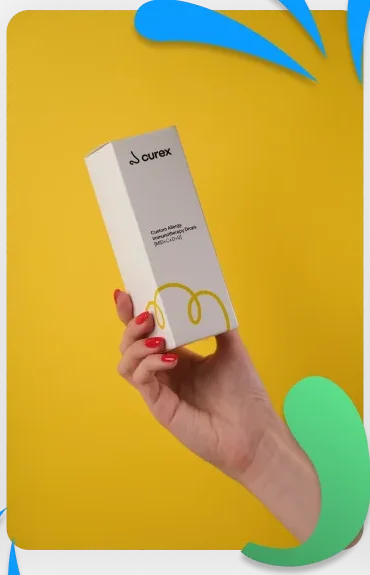
Product photographs are Curex's own, published on getcurex.com, the site our link opens; the people pictures on this page are illustrations.
The Ledger: every price Curex published on one day
What this means for you: before you pay anything, you can see the whole spread the vendor itself prints, and take the page path with you to check it against whatever your own quiz shows.
Each row below was read on getcurex.com on September 8, 2026, on the page named in the third column. The recon behind this review read the same pages on September 7, 2026 and found the same figures.
Six monthly prices for the same treatment
The six rows, verbatim: $39, $49, $59, $79, $99 and $149 a month, each with the Curex page that printed it
| Monthly | What Curex prints, verbatim | Where it prints | Read |
|---|---|---|---|
| $39 | "Smart Saver Plan from $39 /month. Patient's responsibility. Includes allergy drops and free shipping." The home page prints the same figure as "Allergy Drops Treatment From $149 $39 / Month", with $149 struck through, and /plans/prevention prints "Immunotherapy Delivered $39/month + copay". | getcurex.com/pricing, /, /plans/prevention | Sep 8, 2026 |
| $49 | "Monthly $49/month + Copay (Patient responsibility for each required quarterly video visit)", with "Annual $490/year + Copay" beside it. | getcurex.com/insurance-faqs | Sep 8, 2026 |
| $59 | "Curex Less than 2 hours $59/month + copay", in the comparison table against allergy shots. | getcurex.com/kids-allergy-care | Sep 8, 2026 |
| $79 | "Option 1: Insurance plans with 6 recommended video visits. Monthly $79/month for immunotherapy subscription + Visit Copay (6 per year)". The newest page prints "from $79/mo with insurance · $79/mo self-pay" and, in its plan card, "Self-pay · Billed yearly $948/yr". | getcurex.com/insurance-faqs, /allergy-drops | Sep 8, 2026 |
| $99 | "Our self-pay plan for $99/month has no copays or surprise fees", and "Option 2: Self-Pay plans with 6 recommended visits and no copays. Monthly $99/month ... Annual $990/year. 2 months free!" | getcurex.com/pricing, /insurance-faqs | Sep 8, 2026 |
| $149 | "our food allergy subscription plan is $149/month for allergy drops with no other out of pocket costs for consultations", in the FAQ that runs sitewide. | getcurex.com/pricing, / | Sep 8, 2026 |
Four annual figures run alongside them: "$490/year + Copay", "$790/year ... 2 months free!" and "$990/year ... 2 months free!" on /insurance-faqs, and "$948/yr" on /allergy-drops. The food-allergy plan is $149/month in the sitewide FAQ and "Food SLIT is $79/month" on /allergy-drops, on the same day.
Three prices for one sign-up step in a single page load: $49, $4.99 and $19.99
Three prices for one step, in a single page load
| Sign-up | What Curex prints, verbatim | Where it prints | Read |
|---|---|---|---|
| $49 | The list price, struck through in the sale strip and printed plainly as "New Patient Sign-Up Call $49 $4.99" in the pricing table. | getcurex.com/pricing | Sep 8, 2026 |
| $4.99 | "Sale! Get started today for only $49 $4.99", in the strip that runs on every page, with $49 struck through. | sitewide strip, read on /pricing and /getting-started | Sep 8, 2026 |
| $19.99 | Flash-sale banner: code CUREX19 for $19.99 instead of $49. Ending this week. | sitewide top bar, read on /pricing | Sep 8, 2026 |
All three sat on the same render of the same page: the top bar said $19.99, the strip under it said $4.99, and the pricing table said $49 with $4.99 next to it. On /plans/prevention the same step is labelled "DUE TODAY: $49 $4.99 Sign-up fee (refundable)".
What we could not verify: the step-one charge, and two open items about this page
The amount Curex actually charges at step one is set inside its own quiz, behind the paid onboarding step, and this review did not enter the funnel. So this page names no step-one charge: we print the three published figures above, and nothing else.
The same is true of the monthly figure you would be quoted after your clinical review. Six are published; which one attaches to a given patient depends on the plan and the insurance route Curex puts them on, and that decision happens inside the funnel.
Observed step-one charge: not yet observed. This line is reserved for one number and one date, read at Curex's own checkout through the link on this page.
Until that line carries a number, treat every figure in the two tables above as a published price, not as a charged price, and check the total on Curex's own screen before you pay.
Two more open items, about this page rather than about Curex. Our commission group for Curex has not been screenshotted, so we have not confirmed on screen what a sign-up through this page pays us.
And the link on this page on this page has not been walked end to end: nobody here has clicked it through to Curex's own checkout and watched the click register.
Those two, plus the unobserved step-one charge above, are the three things this review still owes you. They stay printed here until each one is closed.
Everything else that can be charged: consultation fee, testing, shipping and the fees the pages do not name
Everything else that can be charged
What this means for you: the subscription is not the whole bill, and the vendor's own savings calculator leaves out most of the rest.
/pricing, Sep 8, 2026/pricing, Sep 8, 2026/pricing, Sep 8, 2026/pricing, "we also cap copays at $500/year" on /kids-allergy-care, both Sep 8, 2026./pricing, Sep 8, 2026/legal/terms, Sep 8, 2026/pricing, Sep 8, 2026/legal/terms, Sep 8, 2026What the vendor's own "$6,156 over 3 years" calculator counts, and what it leaves out
What the "$6,156 over 3 years" figure counts, and what it leaves out
On /allergy-drops, Curex runs a calculator that prints, verbatim: "In-clinic shots - 3 years ... Out-of-pocket ($250/mo) $9,000" against "Curex drops - 3 years ... Subscription ($79/mo) $2,844", and concludes "You save with Curex drops $6,156 over 3 years". Read Sep 8, 2026.
| Line | In the calculator | Not in the calculator |
|---|---|---|
| Curex subscription | $79 x 36 = $2,844 | The arithmetic is correct at $79. At the other five published prices the same 36 months run from $1,404 to $5,364, our own sum. |
| Copays | Nothing | About $600 over three years, using Curex's own $200/year average for patient responsibility. |
| Allergy test | Nothing | $199 self-pay, or a lab bill to your insurance, plus a possible phlebotomist fee. |
| Sign-up step | Nothing | $49, $4.99 or $19.99, depending which banner you believe, and non-refundable once processed. |
| Consultation fee | Nothing | Up to $100, non-refundable, whether or not anything is prescribed. |
| EpiPen | Nothing | Prescribed to every patient, cost not published. |
| The shots column | $250/mo, unsourced | The same page separately puts in-clinic shots at "$167-$417/mo", and Curex's cost table elsewhere puts allergy shots at "$2,000 - $5,000" total. |
Our own sums are marked as ours. Curex's figure is arithmetically right on its own inputs; the question a buyer needs answered is which inputs are missing, and the missing ones all run the same direction.
Does insurance pay for Curex? Its own FAQ says the drops are not covered
Does insurance pay for Curex?
What this means for you: the badge and the sentence say two different things, and only one of them is about the drops.
Curex runs a "We accept all major insurance providers" line across its site. Its own insurance page then says, verbatim:
"With respect to immunotherapy drops, while insurance coverage for allergy drops is currently unavailable, your clinical consultations may be covered depending on your plan! This results in a lower monthly subscription cost for allergy drops if you are using insurance."getcurex.com/insurance-faqs, read September 8, 2026
So the drops are an out-of-pocket subscription. What gets billed to insurance is the video visits, which is also why the insurance-route plans carry a copay line and the self-pay plans do not.
Two consequences the Terms spell out. First, the visit quota: Curex's own protocol "recommends 6-8 telehealth consults per year", and "If you're currently on the insurance-covered plan but unable to schedule the required number of video visits, your plan may be transitioned to a self-pay model." Second, the balance: "Curex may charge your card on file for any remaining balance not paid by your insurer."
Curex also states that the drops are HSA and FSA eligible, read on /pricing and /allergy-drops, and that the drops subscription includes "free shipping", read on /pricing and /plans/prevention. All September 8, 2026.
The clause that governs all of it: "all fees are non-refundable", sign-up fees included
The clause that governs all of it: nothing here is refundable
What this means for you: on the allergy line there is no money-back guarantee to fall back on, so the only protection you have is cancelling before the next batch is compounded.
All four sentences below are verbatim from Curex's Terms of Use, read on September 8, 2026.
"At Curex, we provide high-quality, personalized treatments across multiple product lines, including but not limited to SLIT drops, nasal sprays, and other compounded medications. Because every product is custom-made for each patient, all fees are non-refundable."getcurex.com/legal/terms, read September 8, 2026
"Any and all signup fees processed are non-refundable."getcurex.com/legal/terms, read September 8, 2026
"Completion of a clinical consultation constitutes a non-refundable service fee of up to $100, regardless of whether a prescription is dispensed or shipped."getcurex.com/legal/terms, read September 8, 2026
"We do not issue refunds or credits for partially used subscription periods, even if you stop treatment early. Some prescriptions are compounded or prepared as multi-month supplies. Once a multi-month supply has entered fulfillment, you are responsible for the entire cost of that supply, regardless of early cancellation, pause, or discontinuation."getcurex.com/legal/terms, read September 8, 2026
Prepaid plans are tighter still: "If you cancel your subscription before the end of your prepaid term, your plan will remain active until the term ends, but no refunds, partial credits, or prorated amounts will be issued for unused months. By enrolling in a prepaid plan, you agree to commit for the full term selected." And on returns: "Curex does not accept returns of compounded medications once they have entered fulfillment."
There is no money-back guarantee on the allergy line at all. The Terms do allow one discretionary exception, in their own words: "In limited circumstances, Curex may, in its sole discretion, provide refunds or credits as a courtesy. These exceptions are rare and not guaranteed."
How to cancel Curex, in the vendor's own words: by phone or email, before the next order ships
How to cancel Curex, in the vendor's own words
"If you choose a subscription option, your subscription will continue to renew automatically unless you request the cancellation by calling Curex at (857) 240-1080 or email us at hi@getcurex.com. If you choose a one-time payment option, no other charges are due."getcurex.com/legal/terms, read September 8, 2026
"You may cancel or pause your subscription at any time before your next order enters fulfillment. Once a product has entered the fulfillment process, defined as compounding, preparation, or shipment, you are responsible for the full cost of that order."getcurex.com/legal/terms, read September 8, 2026
"Submission of a cancellation request does not waive financial responsibility. If a shipment has entered fulfillment, any outstanding balance for that shipment may be automatically billed upon processing your cancellation."getcurex.com/legal/terms, read September 8, 2026
There is no self-serve cancel button. The two routes Curex publishes are the phone number and the email address above, and a second Terms passage repeats the email one: "To inquire about cancellation or your subscription status, please email hi@getcurex.com."
The timing is the part that costs money.
Shipments go out quarterly ("Treatments are shipped in 3 month installments in all plans", /pricing), and the window closes when the next batch enters "compounding, preparation, or shipment", not when it leaves the building. Once it opens, the whole three-month supply is owed.
Our practical rule: cancel in writing to hi@getcurex.com, well before your next quarterly refill date rather than near it, keep the email, and call (857) 240-1080 the same day so there is a second record. Ask, in that email, for written confirmation that no order has entered fulfillment. Nothing here waives what the Terms say; it just gives you the timestamp if you ever need one.
Where the marketing pages and the Terms disagree: two live contradictions
Where the marketing pages and the Terms disagree
Both pairs below were live on the same day, September 8, 2026. We print both sides and let you decide which one you would want to be arguing about later.
| The question | What the marketing page says | What the Terms say |
|---|---|---|
| Is the sign-up fee refundable? | "DUE TODAY: $49 $4.99 Sign-up fee (refundable). Service deposit is fully refundable if no services (clinical visit or testing) are provided." /plans/prevention | "Any and all signup fees processed are non-refundable." /legal/terms |
| Can you get part of a prepayment back? | "Cancellations are accepted prior to the next refill being compounded by the pharmacy (so you can get a partial refund on a prepayment plan)." /pricing, and the same FAQ sitewide | "no refunds, partial credits, or prorated amounts will be issued for unused months. By enrolling in a prepaid plan, you agree to commit for the full term selected." /legal/terms |
Curex's Terms also state that the fees "set forth available at https://getcurex.com/pricing ... are incorporated into these Terms", which is the pricing page that carries three of the six monthly figures.
Every figure and quote above was read on getcurex.com on September 8, 2026 and can change. We are not a medical provider and this is not medical advice: talk to a clinician before starting or stopping any treatment.
Check Today's Price at Curex →Opens getcurex.com/allergy-drops · read the sign-up figure and the monthly figure on Curex's own screen before you pay, and keep this page open next to it
What the published evidence covers, what it does not, and what the FDA reviews here
What the published evidence covers, and what it does not
What this means for you: there is real, independently graded research behind sublingual immunotherapy as a category, and there are two published findings that specifically do not reach the compounded per-patient mixture Curex sells. You should have both before you pay.
Every quote below was pulled from the PubMed record on September 8, 2026, except the two marked as quoted on Curex's own science page, which we read the same day.
The category, at a moderate grade
Lin SY and colleagues, JAMA 2013, PMID 23532243, reviewed 63 studies covering 5,131 participants and concluded there is "a moderate grade level of evidence to support the effectiveness of sublingual immunotherapy for the treatment of allergic rhinitis and asthma, but high-quality studies are still needed to answer questions regarding optimal dosing strategies." The same abstract notes that "In the United States, sublingual immunotherapy is not approved by the Food and Drug Administration."
The Cochrane review by Radulovic and colleagues, CD002893, PMID 21154351, pooled 49 randomized trials (2,333 people on sublingual immunotherapy against 2,256 on placebo) and found that sublingual immunotherapy produced a significant drop in symptoms (SMD -0.49; 95% confidence interval (CI) -0.64 to -0.34, P < 0.00001) and in medication requirements (SMD -0.32; 95% CI -0.43 to -0.21, P < 0.00001), adding that "None of the trials included in this review reported severe systemic reactions or anaphylaxis".
Its senior author's department declares funding from an allergen-extract manufacturer.
A 2026 umbrella review of 20 systematic reviews, Wang Z and colleagues, PMID 40935870, puts the certainty in plain numbers: "among all evaluated outcomes, 7 were rated as high quality, 19 as moderate quality, 31 as low quality, and 14 as extremely low quality according to the GRADE framework."
The strongest liquid results belong to standardized European products
Di Bona D and colleagues, Front Allergy 2025, PMID 40538627, pooled 25 randomized trials and 1,830 patients on one manufacturer's standardized liquid, reporting symptom and medication drops of SMD -0.30 (95% CI -0.41 to -0.18) and SMD -0.51 (95% CI -0.72 to -0.29). Two of its authors are employees of that manufacturer.
The EfficAPSI cohort, Demoly P and colleagues, PMID 38707866, followed 112,492 people on liquid sublingual immunotherapy against 333,082 controls in the French national claims database and reported a lower risk of asthma onset (combined hazard ratio 0.62, 95% CI 0.60 to 0.63). It was funded by the same manufacturer.
Both studies are about standardized, named products made to a fixed formula. Curex's drops are compounded per patient, which is a different thing, and the next two papers are about that difference.
The two findings that speak to this exact preparation
Multiallergen mixes, given under the tongue
Nelson HS, Curr Opin Allergy Clin Immunol 2009, PMID 19745727, verbatim: "multiallergen extracts are effective when given by injection, but a similar efficacy has not been established for them when administered sublingually."
Curex compounds a personalized mixture for each patient, which is a multiallergen sublingual preparation.
Dose ranges for US compounded drops
Mahler V and colleagues, J Allergy Clin Immunol 2019, PMID 30850069, quoted by Curex itself on getcurex.com/immunotherapy-science, read September 8, 2026: "Commercial aqueous extract products are not FDA approved for sublingual administration, and these have not been rigorously studied in double-blind placebo-controlled studies. Thus effective and safe dose ranges have not been characterized for commercial aqueous allergen extracts (marketed for SCIT) used in the preparation of nonapproved SLIT drops."
That sentence sits on Curex's own reference page, under its own heading about compounding and off-label prescribing.
Two numbers the vendor prints that its own sources do not support
That line sits on getcurex.com/pricing with a footnote linking a university press release about the study behind it. The study is Hardin FM, Eskander PN and Franzese C, OTO Open 2021, PMID 34723051, and its own abstract reads: "the baseline total cost to the payor of SLIT per successful treatment outcome is $1196 while the charge of SCIT per successful treatment outcome is $2691."
$1,196 against $2,691 is 55.6% lower, our own arithmetic, and it is measured from the payor's perspective, not the patient's.
The paper's conclusion, that drops came out as the more cost-effective option per successful outcome, survives. The 62% does not appear in it.
That table is on getcurex.com/safety with no citation attached. The figure traces to Epstein TG and colleagues, J Allergy Clin Immunol Pract 2017, PMID 27815065, which Curex quotes in full on its own science page, verbatim: "Surveillance data for off-label liquid SLIT (nonstandardized and generally multiallergen) in the United States identified 45 SARs in 3343 patients (1.4% of patients) between 2012 and 2013, including 9 grade 2 SARs (0.3% of patients) and 1 grade 3 SAR (0.03% of patients)."
The 0.03% is the single grade 3 case. The all-systemic-reaction rate in the same sentence is 1.4% of patients, and the population it describes, off-label liquid drops that are "nonstandardized and generally multiallergen", is the product class Curex sells. The abstract's own summary line is worth keeping next to it: "Potentially life-threatening events from SLIT do occur, although they appear to be very rare, especially for FDA-approved products."
What is FDA-reviewed here, and what is not
Curex's own footer carries the disclosure this review inherits verbatim, on every page we read on September 8, 2026:
"Compounded medications have not been approved by the FDA and the FDA has not evaluated their safety or efficacy."getcurex.com footer, sitewide, read September 8, 2026
Its pricing page says the same thing about the drops themselves: "because these drops are compounded specifically for each patient, they are not individually reviewed by the FDA for safety or efficacy. As a result, while clinicians may prescribe allergy drops off-label when medically indicated, this practice is both legal and common." The newest product page repeats it in one line: "Allergy drops are compounded at a specialty pharmacy for each patient. The FDA does not review compounded products for safety or efficacy."
There is an approved alternative, and a buyer should know it exists before clicking. Epstein 2017 states it plainly: "Food and Drug Administration (FDA)-approved grass and ragweed SLIT tablets have been available in the United States since 2014."
Curex names the full set itself on /allergy-drops, read September 8, 2026: "The only FDA-approved SLIT products are tablets (Grastek, Oralair, Ragwitek, Odactra)", the last of which is for house dust mite. Those tablets are reviewed products with published dose ranges. If your problem is one of those three allergens on its own, that is a specific question worth asking a clinician before starting a compounded multi-allergen drop.
Safety notes Curex publishes itself, read September 8, 2026: "Eosinophilic esophagitis and uncontrolled or severe asthma are contraindications" (/allergy-drops); an epinephrine auto-injector is prescribed to every patient, and patients with a history of anaphylaxis or being treated for food allergies "are required to have an EpiPen available every time they take their drops" (/pricing).
Curex also states that medication "will not be shipped in child-resistant packaging" (/legal/terms). None of this is medical advice, and none of it replaces the conversation with the clinician who would be prescribing.
What actually happens after you click, what we audited, and what buyers say elsewhere
What actually happens after you click
Read in order from Curex's own /getting-started page and its Terms of Use, September 8, 2026. The order below is the one with an allergy test included; if you upload prior IgE or skin-scratch results, the test step drops out.
"Finish your quiz & pay onboarding fee." The quiz is free; the onboarding fee is the step whose price is published at $49, $4.99 and $19.99 on the same day.
"Complete medical history." This intake is also where the allergy test gets ordered on your behalf.
"Verify your ID."
"Complete your allergy test (We will send you a requisition & instructions)." An IgE blood test through LabCorp or Quest, billed by the lab to your insurance, or $199 self-pay if you say so before the test: "If self-pay is not selected prior to getting the test, your insurance will be billed & we will not be able to switch you to self-pay."
"Once your test results are in, confirm your details. (Preclinical Form)"
"Connect with a Curex clinician to get your treatment plan." Completing that consultation triggers the non-refundable service fee of up to $100, whether or not you are prescribed anything.
"If eligible, get 3 months of supply shipped to your home." A compounding pharmacy prepares the drops; an epinephrine auto-injector is prescribed alongside them.
Then it renews. Quarterly shipments, an auto-renewing subscription, a clinical protocol that "recommends 6-8 telehealth consults per year", and cancellation only by phone or email, only before the next order enters fulfillment.
What we audited on the way through
- A countdown that does not count down. The top of /allergy-drops reads "Deal Ends Today · Save 35% annual plan · 09 : 32 : 11". It rendered with the same shape on September 7 and again on September 8, 2026. Our page runs no timer, and neither should your decision.
- A live counter that argues with the page it sits on. The same page prints "50,000+ Patients treated" in its stat block and, a few lines below, "12,000 patients treated · 0 just got matched today 53 patients started today". Both were on the same render on September 8, 2026. We repeat neither figure as a fact; we print the contradiction.
- An evergreen flash sale. The top bar reads a flash-sale banner citing code CUREX19 for $19.99 instead of $49, ending that week. It said the same thing on both days we read it.
- A scope contradiction a food-allergy buyer cannot resolve. On getcurex.com/pricing, on the same day: "Curex currently treats allergies to tree, weed, grass pollens, pet allergies, dust mites, mold and cockroach. We do not treat food, metal, venom or flower allergies." And, in the FAQ further down the same page: "Absolutely! We treat more than 90 different food allergies". The sitewide FAQ also prices a food-allergy plan at $149/month while /allergy-drops prints "Food SLIT is $79/month". If food allergy is your reason for being here, ask before you pay.
- A copay cap with two values. "we also cap copays at $400/year" on /pricing; "we also cap copays at $500/year" on /kids-allergy-care. Same site, same day.
- The dispute terms. The Terms of Use require binding individual arbitration under AAA Consumer Arbitration Rules, seated in New York, with a class-action waiver, and make members of "a family, household, dependent, or shared account ... jointly responsible for all amounts owed by any member of that account."
What buyers say elsewhere, and what the shape of it means
Trustpilot for getcurex.com, read September 8, 2026: a TrustScore of 4.2 across 91 reviews, distributed 75% five-star, 1% four-star, 1% three-star, 1% two-star and 22% one-star.
That barbell, almost nothing between the top and the bottom, is itself the finding. It is the profile of a service where the experience either works or ends in a billing argument, which is what a non-refundable, auto-renewing, compounded subscription is built to produce. The complaint themes visible in that page are unexpected recurring charges, formulation errors and cancellation friction.
We do not reproduce Curex's own customer testimonials, its clinician endorsements, its live counters or its countdown. The Trustpilot figures above are third-party and dated.
Every question, honestly answered
How much does Curex cost?
It depends which of Curex's own pages you read, which is the reason this review exists. On September 8, 2026 the same drops subscription was published at six different monthly prices: $39 on getcurex.com/pricing (the "Smart Saver Plan"), $49 on /insurance-faqs, $59 on /kids-allergy-care, $79 on /insurance-faqs and /allergy-drops, $99 on /pricing as the self-pay plan, and $149 in the sitewide FAQ for the food-allergy plan.
Four annual figures run alongside them: $490, $790 and $990 a year on /insurance-faqs, and $948 a year on /allergy-drops. On top of the subscription sit the allergy test ($199 if you self-pay, otherwise billed to your insurance by LabCorp or Quest), the consultation fee of up to $100, copays that Curex itself averages at $200 a year, and an epinephrine auto-injector whose cost is not published. We did not enter the funnel, so this review names no charged price: check the number on Curex's own screen before you pay.
What does Curex charge to sign up?
Three numbers, all visible in a single page load on September 8, 2026: $49 as the list price ("New Patient Sign-Up Call $49 $4.99"), $4.99 in the sitewide strip ("Sale! Get started today for only $49 $4.99", with the $49 struck through), and $19.99 in the top bar (a flash-sale banner citing code CUREX19 for $19.99 instead of $49, ending that week).
Whichever one your checkout applies, Curex's Terms of Use say it does not come back: "Any and all signup fees processed are non-refundable." One marketing page disagrees with that, and we print both sides above.
Does insurance cover Curex allergy drops?
No, per Curex itself. Its insurance page reads, verbatim, on September 8, 2026: "while insurance coverage for allergy drops is currently unavailable, your clinical consultations may be covered depending on your plan!" So the drops are an out-of-pocket subscription, and what gets billed to insurance is the video visits.
Two consequences to plan around. Curex's protocol recommends 6 to 8 telehealth consults a year, and its Terms say a patient who cannot schedule the required visits "may be transitioned to a self-pay model".
And on the balance insurance leaves behind: "Curex may charge your card on file for any remaining balance not paid by your insurer." Curex states the drops are HSA and FSA eligible.
Can you get a refund from Curex?
There is no money-back guarantee on the allergy line. Curex's Terms of Use, read September 8, 2026: "Because every product is custom-made for each patient, all fees are non-refundable", "Any and all signup fees processed are non-refundable", and "Completion of a clinical consultation constitutes a non-refundable service fee of up to $100, regardless of whether a prescription is dispensed or shipped."
There is also no proration: "We do not issue refunds or credits for partially used subscription periods, even if you stop treatment early", and for prepaid terms, "no refunds, partial credits, or prorated amounts will be issued for unused months." Two marketing pages say something softer, a "(refundable)" sign-up fee on /plans/prevention and "a partial refund on a prepayment plan" in the sitewide FAQ; both are contradicted by the Terms, and both contradictions were live on the same day.
How do you cancel a Curex subscription?
By phone or email only. Verbatim from the Terms of Use: "your subscription will continue to renew automatically unless you request the cancellation by calling Curex at (857) 240-1080 or email us at hi@getcurex.com." There is no self-serve cancel button published anywhere we read.
Timing decides what it costs. "You may cancel or pause your subscription at any time before your next order enters fulfillment. Once a product has entered the fulfillment process, defined as compounding, preparation, or shipment, you are responsible for the full cost of that order." Shipments go out in three-month installments, so the exposed unit is a whole quarter, and the Terms add: "Submission of a cancellation request does not waive financial responsibility." Cancel in writing well before your next refill date, keep the email, and ask for written confirmation that nothing has entered fulfillment.
Is Curex FDA approved?
The drops themselves are not, and Curex says so. Its footer carries this on every page: "Compounded medications have not been approved by the FDA and the FDA has not evaluated their safety or efficacy." Its pricing page adds: "because these drops are compounded specifically for each patient, they are not individually reviewed by the FDA for safety or efficacy. As a result, while clinicians may prescribe allergy drops off-label when medically indicated, this practice is both legal and common."
What is FDA-approved in this field is a different product: sublingual immunotherapy tablets. Epstein 2017 (PMID 27815065) records that "Food and Drug Administration (FDA)-approved grass and ragweed SLIT tablets have been available in the United States since 2014". Curex itself names the set on /allergy-drops, read September 8, 2026: "The only FDA-approved SLIT products are tablets (Grastek, Oralair, Ragwitek, Odactra)".
Those are reviewed products with published dose ranges. If one single allergen is your problem, that is worth raising with a clinician before starting a compounded multi-allergen drop.
Do Curex allergy drops work?
We cannot answer that for the compounded, per-patient mixture Curex ships, and neither can the published literature yet. What the literature does support is the category: Lin SY and colleagues, JAMA 2013 (PMID 23532243), reviewed 63 studies and 5,131 participants and found "a moderate grade level of evidence to support the effectiveness of sublingual immunotherapy for the treatment of allergic rhinitis and asthma", while the Cochrane review CD002893 (PMID 21154351) pooled 49 randomized trials and reported drops in symptom and medication scores of SMD -0.49 and SMD -0.32.
Two papers speak to this specific preparation and stop short. Nelson 2009 (PMID 19745727): for multiallergen extracts, "a similar efficacy has not been established for them when administered sublingually." Mahler 2019 (PMID 30850069), quoted by Curex on its own science page: "effective and safe dose ranges have not been characterized for commercial aqueous allergen extracts (marketed for SCIT) used in the preparation of nonapproved SLIT drops." Whether it is a reasonable option for you is a question for the clinician who would prescribe it, not for a review page.
Is Curex legit?
As a service, the structure is real and checkable: clinical visits are mandatory ("Are clinical visits required? Yes"), the drops are prescribed by a licensed clinician and compounded by a specialty pharmacy, testing runs as an IgE blood test through LabCorp or Quest, an epinephrine auto-injector is prescribed to every patient, the informed-consent document names the professional entities, and Curex, Inc. publishes a phone number and address. Trustpilot, read September 8, 2026, shows 4.2 across 91 reviews, with 75% five-star and 22% one-star and almost nothing in between.
What we could not settle: which price applies to a given patient, since six are published; and what the card is charged at step one, since that number lives inside the quiz. We also do not repeat Curex's ranking claims, its patient counts or its certification badge, none of which we could verify. Buy it, if you buy it, on the Terms of Use, not on the banners.
What does Curex treat, and does it cover food allergies?
Curex's own pages disagree about food. On getcurex.com/pricing, on September 8, 2026: "Curex currently treats allergies to tree, weed, grass pollens, pet allergies, dust mites, mold and cockroach. We do not treat food, metal, venom or flower allergies." Further down the same page, in the sitewide FAQ: "Absolutely! We treat more than 90 different food allergies".
The prices disagree too: the sitewide FAQ puts a food-allergy plan at $149/month, while /allergy-drops prints "Food SLIT is $79/month". If food allergy is your reason for looking, get the answer in writing from Curex before paying any fee, because the fee is not refundable once processed.
Who should not use Curex, and is it available outside the United States?
Curex names its own contraindications on /allergy-drops: "Eosinophilic esophagitis and uncontrolled or severe asthma are contraindications." It also states that an epinephrine auto-injector is prescribed to every patient, that patients with a history of anaphylaxis or being treated for food allergies must have one available every time they take their drops, and that medication "will not be shipped in child-resistant packaging". We are not a medical provider and nothing here is medical advice: the eligibility decision belongs to a clinician who has your history.
On geography, Curex is explicit: "We serve patients everywhere in the U.S. We currently do not offer services outside of the U.S." It serves all 50 states and, per its own FAQ, "adults and children as young as 5 years old".
How we reviewed it, and what holds the 7.5 down
How we reviewed it
This is a research review, not a patient report. Nobody on this bench has been prescribed Curex, and we did not enter its funnel.
- On September 8, 2026 we fetched and read Curex's home page, /pricing, /insurance-faqs, /allergy-drops, /kids-allergy-care, /plans/prevention, /safety, /getting-started, /immunotherapy-science and /legal/terms, and quoted them with the page path attached to each figure. The recon behind this page read the same routes on September 7, 2026 and found the same numbers.
- Nine PubMed records were pulled the same day and quoted from their own abstracts: PMIDs 23532243, 21154351, 40935870, 40538627, 38707866, 19745727, 30850069, 27815065 and 34723051. Where a quote comes from a full text rather than an abstract, we took it from the passage Curex itself publishes on /immunotherapy-science and said so.
- Trustpilot for getcurex.com was read on September 8, 2026 for the score, the review count and the star distribution printed above.
- We did not observe a checkout. The quiz that sets the price is a JavaScript application behind a paid step, so every price on this page is a published price, not a charged one, and the page says so where it matters.
- We do not repeat Curex's ranking claims, patient counts, testimonials, clinician endorsements, live counters, countdown or certification badge. Therapeutic sentences on this page are either quoted from Curex with a page path or attributed to a named paper with a PMID.
- Prices, policies and terms change. Every figure here carries the date it was read; check yours at Curex's own checkout before paying. Nothing on this page is medical advice.