The short answer: 35 mg a day, from supplements only
Thirty-five milligrams a day is the Tolerable Upper Intake Level, or UL, that the NIH Office of Dietary Supplements sets for niacin in adults 19 and older. It applies only to supplemental niacin; food is not counted against it.
It is a safety ceiling, not a dose to aim for, and it is not the percent Daily Value printed on a Supplement Facts panel. A label can print a percentage well above 100% while sitting above that 35 mg line, and the panel will never say so.
The Tolerable Upper Intake Level for niacin, adults 19 and over. Applies only to supplements, not food.
NIH ODS, read Sep 3, 2026
The federal Daily Value niacin's percentage is calculated against, a separate figure from the 35 mg ceiling.
21 CFR 101.9(c)(8)(iv)
Niacin (Vitamin B3) per 2-capsule serving, on a prostate formula's own panel. More than double the 35 mg ceiling.
Per the brand's own label, read Sep 3, 2026
What the ceiling is measuring, in the words of the body that set it
The ODS fact sheet sets ULs for niacin "that apply only to supplemental niacin", and says they are "based on the levels associated with skin flushing".
NIH Office of Dietary Supplements, Niacin: Fact Sheet for Health Professionals · read September 3, 2026What "supplemental only" and "based on flushing" mean for the 35 mg number
The ceiling applies only to supplemental niacin, so a normal day of food, which naturally contains niacin, is not the intake it protects against. And it was set on flushing, a specific and generally harmless effect, not on a more severe one. That does not make 35 mg a small number to cross: the number has one named job, keeping supplemental intake below the point where flushing becomes likely.
NIH Office of Dietary Supplements, Niacin: Fact Sheet for Health Professionals, ods.od.nih.gov, read September 3, 2026.
Where the flush usually starts, and which form of niacin does it
"Thirty to 50 mg or more nicotinic acid typically causes flushing."
NIH Office of Dietary Supplements, Niacin: Fact Sheet for Health Professionals · read September 3, 2026The word that matters in that sentence is nicotinic acid. Niacin is not one molecule on every label: nicotinic acid is the form this flushing range describes, and a second common form, niacinamide (also called nicotinamide), is generally not tied to the same flushing at comparable doses.
Why 30 to 50 mg is a band for one form, not a hard line for every bottle
The range, 30 to 50 mg, is a band worth knowing. It is not an alarm bell. It marks a rough floor for one specific form. It is not a hard line for every bottle labeled "niacin."
Percent Daily Value and the ceiling are two different rulers
The percentage next to niacin on a label is not measured against the 35 mg ceiling. It is measured against a separate number: the Daily Value.
Niacin's Daily Value for nutrition labeling: 16 mg NE (Niacin Equivalents), for adults and children 4 years and older.
21 CFR 101.9(c)(8)(iv) · read via govinfo.gov, September 3, 2026Sixteen milligrams is the label's own ruler, built so a shopper can compare one nutrient across foods and supplements on a common 100% scale. Thirty-five milligrams is a safety ceiling for supplemental intake, set for a different reason, by a different process. No rule requires a label to print both numbers side by side. In our reading, none do.
The arithmetic behind a three-digit percentage
The label we read for this page, transcribed verbatim:
| Ingredient, as printed | Amount per serving | Percent Daily Value |
|---|---|---|
| Niacin (Vitamin B3) | 75 mg | 469% |
The serving size on that panel is two capsules. The panel's own percentage is plain division against the 16 mg Daily Value.
75 mg ÷ 16 mg = 4.6875 → 469%
That is the 469% printed on the panel; it reconciles exactly. What the panel does not print anywhere is the 35 mg ceiling, or a comparison to it. Run that comparison yourself: 75 mg is more than double 35 mg.
Percentage arithmetic is ours, applied to the brand's own printed amount and 21 CFR 101.9's 16 mg Daily Value. Label amount per the brand's own Supplement Facts panel, read September 3, 2026.
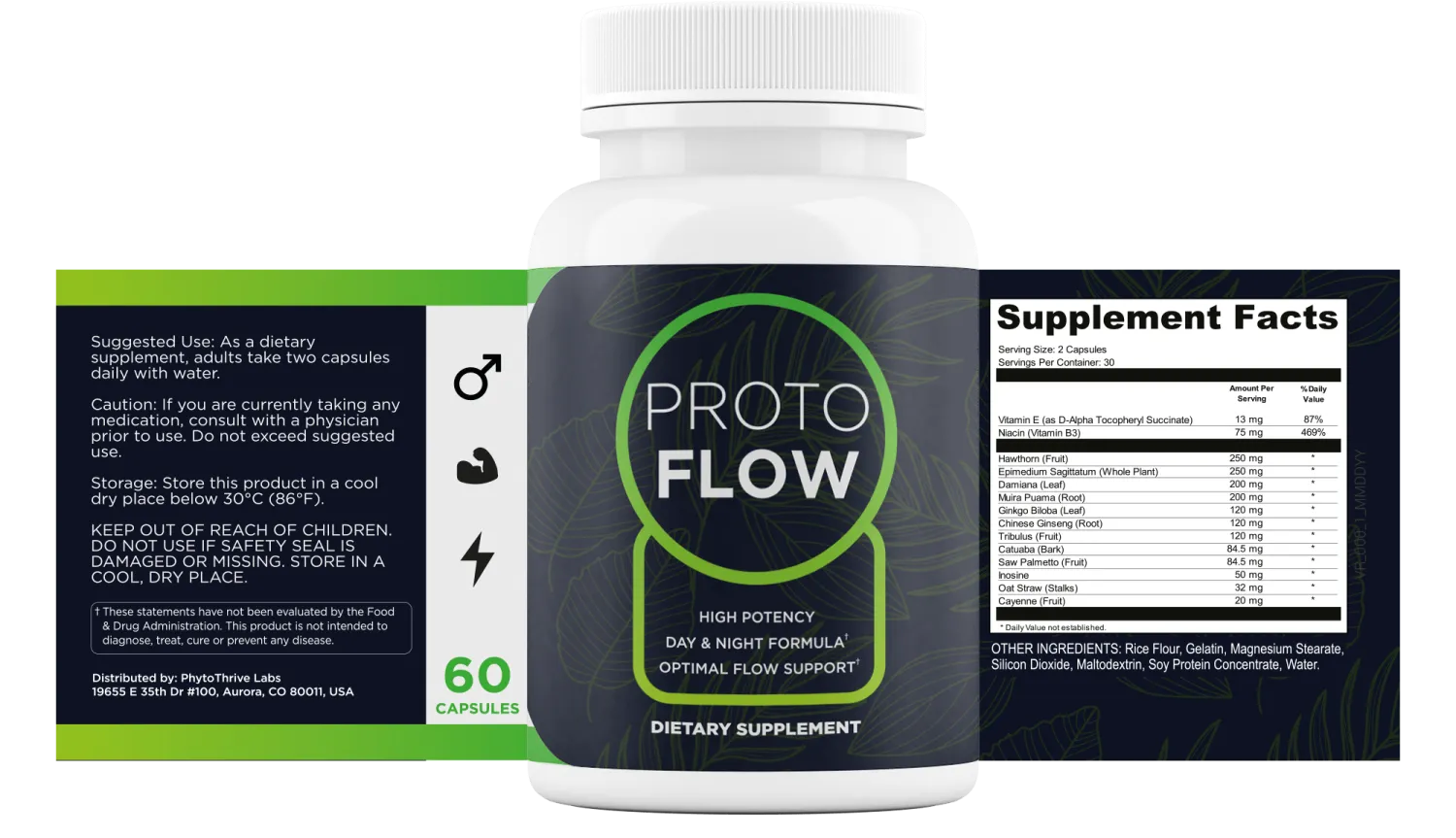
The panel we read the 75 mg and 469% figures from, transcribed September 3, 2026. Niacin sits second on the panel's own ingredient list; its line prints an amount and a percentage, and no form.
Every other figure on this page (the 35 mg ceiling, the 16 mg Daily Value, and the 30 to 50 mg flushing range) comes from the two federal sources quoted above, not from this label. Saw palmetto is another line on this same panel; see how much saw palmetto per day for what its own milligram figure does and does not tell you.
Most panels do not print the form, and that leaves the question open
The label above prints "Niacin (Vitamin B3)." It does not print "nicotinic acid" or "niacinamide" in that line, or elsewhere on the panel we read. Only nicotinic acid is the form the fact sheet ties to the 30 to 50 mg flushing range. Without the form printed, the honest answer is not "this will cause flushing": the question stays open, and the label does not close it.
The fact sheet does not name this product, and neither do we
- The NIH fact sheet describes niacin in general. It does not name, or mention, any specific branded formula.
- Nothing in our file tests whether this exact 75 mg dose, in this exact product, causes flushing in a given person.
- The label does not state which form of niacin is inside the capsule. A flushing prediction for this bottle is not something the panel, on its own, can confirm.
- None of this claims the ingredient is unsafe at this dose for everyone. It is a comparison between two published numbers and one printed amount.
What this means for you: 75 mg is a real number worth comparing to 35 mg. Whether it causes flushing for you depends on a form the label does not state.
What a printed milligram figure gives you, what it does not, and the alternatives when the form is unstated
What a printed milligram figure gives you
- A number you can compare directly against the 35 mg ceiling, without needing the percentage at all.
- A way to tell two products apart when both name niacin on the same line.
- A starting point for a specific question to ask a pharmacist: which form, at this dose?
What it still does not give you
- The form of niacin, when the panel prints only the ingredient name and the number.
- Any claim that the finished product was tested in people at this exact dose.
- A prediction of whether flushing will happen for a given person, at a given dose.
When a panel leaves the form unstated, a few honest alternatives exist: a single-ingredient niacin product that states its form on the label, outside any blend; a product whose maker discloses form in writing when asked, in a customer-support answer you can save; or a lower-dose formula, one that sits closer to or under the 35 mg supplemental ceiling regardless of form.
One label where we did the arithmetic
We ran the check on a prostate formula that prints 75 mg of niacin at 469% Daily Value and never names the form.
Compare the amount column to 35 mg, not the percentage.
The percentage is measured against a 16 mg Daily Value and says nothing about the supplemental ceiling.
Look inside the parentheses for the form.
Only nicotinic acid is the form the fact sheet ties to flushing. A panel that leaves the form out has left your question unanswered.
All fourteen dosed lines and the 469% arithmetic, each dated.
Questions people also ask
How many milligrams of niacin a day is considered too much?
The NIH Office of Dietary Supplements sets a Tolerable Upper Intake Level of 35 mg a day for adults 19 and over, and states that the ULs for niacin "apply only to supplemental niacin".
Does the 35 mg ceiling include niacin from food?
No. The fact sheet says the limit applies only to supplemental niacin, which is why a plate of food does not count against it and a capsule does.
Why does a label say 469% Daily Value if the ceiling is 35 mg?
Because they are two different rulers. The percentage is calculated against the 16 mg Daily Value, so 75 mg divided by 16 mg is 469%, while the 35 mg ceiling is a separate number the panel never prints.
Which form of niacin is the one tied to flushing?
Nicotinic acid. The same fact sheet records that thirty to 50 mg or more of nicotinic acid typically causes flushing, and the ceiling itself was set on flushing as the effect it is protecting against.
Can I tell from a Supplement Facts panel which form is in the bottle?
Often not. A panel may print only "Niacin (Vitamin B3)" with the milligrams and the percentage, and with no form in the parentheses the flushing question stays open.
How we built this page
This is a source-reading page. It is not a lab test, and it is not medical advice.
- No source in our file tests the finished product named on this page for flushing or any other outcome. We did not estimate the form of niacin it contains.
- A new supplement, at any dose named on this page, is worth a conversation with a doctor or pharmacist first, especially if you take medication.
Sources and dates: the NIH fact sheet, 21 CFR 101.9, the label, and our arithmetic
- The 35 mg ceiling and the flushing quotes come from NIH Office of Dietary Supplements, Niacin: Fact Sheet for Health Professionals, ods.od.nih.gov, read September 3, 2026.
- The 16 mg Daily Value comes from 21 CFR 101.9(c)(8)(iv), read via govinfo.gov on September 3, 2026.
- The 75 mg and 469% DV figures were transcribed from a prostate formula's own Supplement Facts panel, read September 3, 2026, for our Protoflow review.
- The 75 ÷ 16 = 469% arithmetic is ours, applied to the two figures above.